
Standard vs custom software: what fits?
In this article
Buy what is common, stable, and well solved. Build what differentiates your operation or cannot fit without workarounds. Integrate both when that is more efficient than replacing. The decision is not only about the license: it also includes adoption speed, dependency, data, maintenance, and ability to evolve.
What is really being compared?
“Standard” may mean an ERP, a SaaS product, a ticketing platform, or a module for a known practice. “Custom” may mean an internal tool, portal, back office, or digital product with specific rules. Neither category is inherently better; they distribute cost, risk, and responsibility differently.
Decision matrix
| Criterion | Standard or SaaS | Custom |
|---|---|---|
| Time to value | Faster when the process can adapt | Slower initially, with discovery and validation |
| Fit | Good for common needs | Designed for specific rules and experience |
| Roadmap | Depends on the vendor | Depends on the team and evolution agreement |
| Dependency | License, vendor, and integration limits | Technical continuity, documentation, and maintenance |
| Data | Product model and export rules | Model designed for the agreed scope |
| Scale | Grows with plan and constraints | Grows with architecture, infrastructure, and budget |
The question is not which option has more features. It is which one sustains the process that matters.
When standard wins
A standard solution wins when the problem is well known, the process can adopt reasonable conventions, and the value is starting quickly with proven functions. It can also fit when the company prefers to delegate some maintenance and needs predictable operating costs.
Before choosing, review users, data export, permissions, integrations, customization, support, updates, and exit conditions. A cheap tool can become expensive if it forces a parallel operation.
When custom wins
Custom development wins when specific rules, exceptions, or user experience have strategic value. It is reasonable when the team can participate in scope definition, validate deliveries, and agree who owns security, infrastructure, fixes, and evolution.
Do not use it to copy a standard feature without a clear reason. Building does not remove maintenance; it makes project responsibility explicit.
The third path: SaaS plus a specific layer
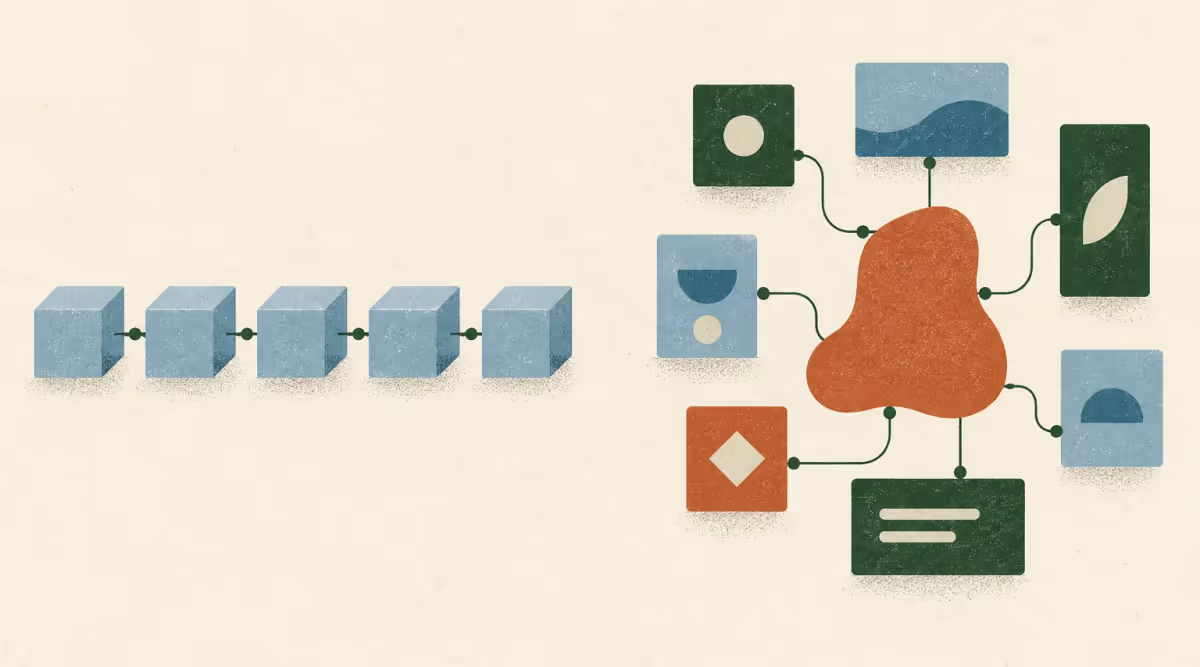
Many organizations use a standard CRM but need a purpose-built tool for operations, costs, or approvals. In that case, the specific layer can focus on the differentiating workflow and connect to the SaaS through a controlled integration.
The business platform can be a starting point for organizing a workflow. Custom software development evaluates what is worth building, while technology integration helps define how systems should coexist.
Analyzed scenario: standard CRM and a specific operation
This is a composed scenario, not a client case. A company uses a CRM for opportunities and contacts, but delivery requires coordinating availability, approvals, documentation, and project-specific conditions.
Replacing the entire CRM could destroy a capability that already works. Building everything from scratch could duplicate functions and create unnecessary cost. The option to evaluate is keeping the CRM, modeling the operational flow in a specific layer, and exchanging only the required data.
What could change the recommendation?
The decision changes if the process is common enough, the vendor offers suitable APIs and permissions, customization is superficial, or volume does not justify a custom architecture. It also changes if there is no owner for maintaining the custom system.
Total cost, lock-in, and evolution
For standard software, add licenses, implementation, migration, consulting, training, integrations, and plan changes. For custom software, add discovery, design, testing, security, infrastructure, documentation, support, and knowledge continuity if the team changes.
A healthy path makes clear what is bought, built, integrated, and out of scope. If the case is still unclear, a technology diagnosis can reduce uncertainty before budgeting.