
Equipment
Welding robot integration
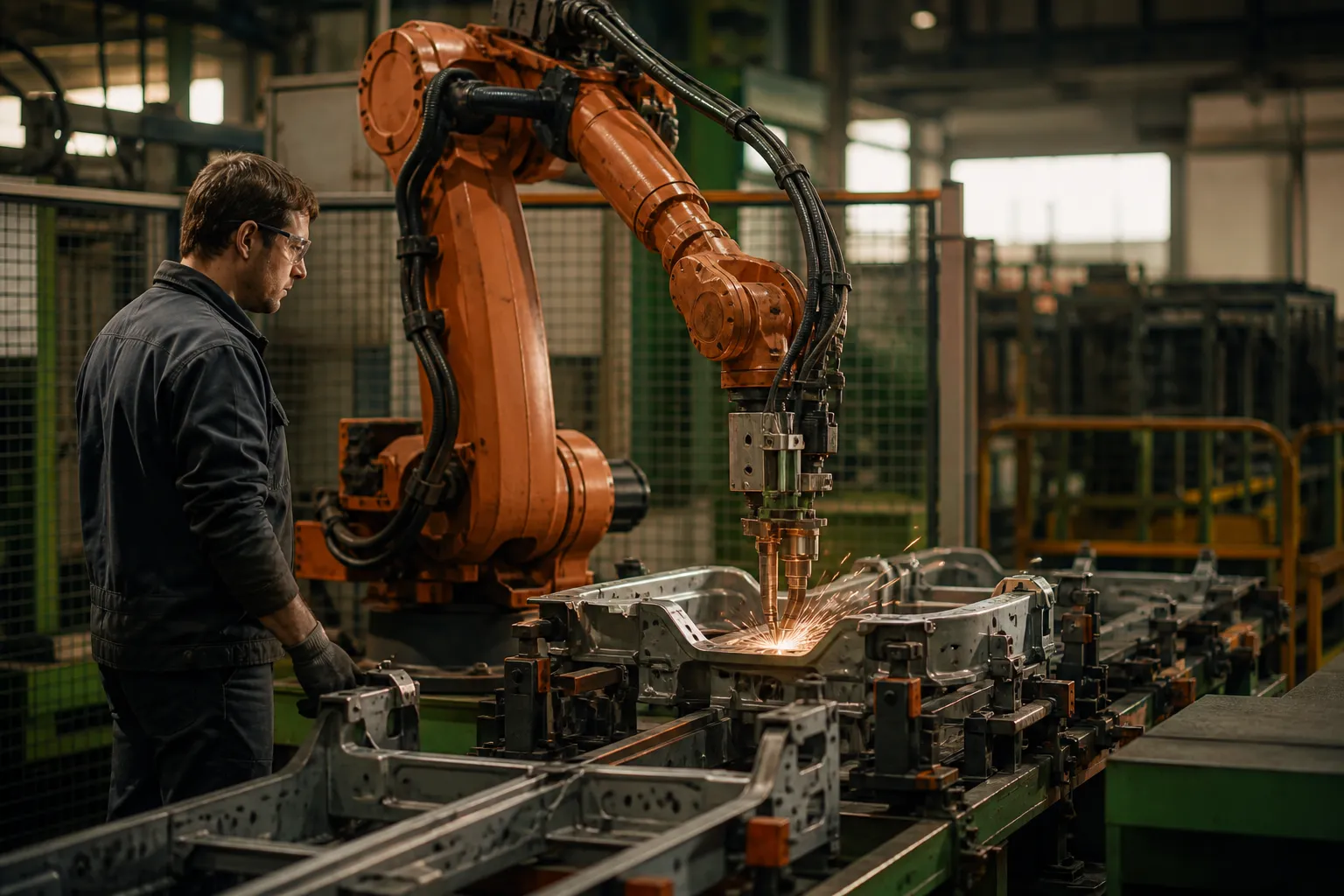
Design and integration of cells for spot, MIG/MAG and TIG welding, from part assessment through commissioning.
The need
A welding robot creates value only when it is part of a cell that respects your part geometry, process sequence, and real plant pace.
What we evaluate before recommending
- Required joint type (MIG/MAG, TIG, or spot welding)
- Part geometry, material, and thickness
- Production volume and expected cycle time
- Gun or torch access and fixturing system
- Line integration and safety conditions
Selection process
- Technical survey and review of plant constraints
- Comparison of robot, source, gun, torch, and positioning alternatives
- Technical and commercial proposal with a defined scope and stages
- Import, documentation, and integration management when required
- Installation, programming, and commissioning plan
How it is implemented
We integrate the cell, program the paths, test the process with your parts, and train your team to operate and sustain the solution.
What changes in your operation
You get a welding cell designed for your parts and production pace, with the robot, peripherals, programming, and safety coordinated as one system.
How it could look in your operation
If you repeat spots or welds across a family of parts and manual work creates variation or limits capacity, we test the process and define an integration your team can operate and maintain.
What you get
- Assessment of parts, process, volume, and plant constraints
- Configuration of robot, source, gun or torch, and positioning
- Fixtures, sequences, and paths programmed within the agreed scope
- Tests with real parts and acceptance criteria
- Training and commissioning support
What we need from you
- Drawings or representative samples of the parts to be welded
- Material, thickness, joint type, and number of spots or welds
- Production volume, cycle time, and references that must run together
- Available floor space, plant utilities, and safety constraints
- An operational contact to validate the process and acceptance criteria
What is not included
- Part or fixture manufacturing that is not included in the agreed scope
- Civil works and electrical upgrades not detailed in the proposal
- Third-party certifications that are outside the project scope
- Continuous production after commissioning
- Long-term maintenance unless contracted as an additional service
Frequently asked questions about this solution
What is the difference between buying a robot and integrating a welding cell?
The robot is only one part of the system. The cell also needs fixtures, a gun or torch, positioning, safety, programming, testing, and training. We assess the complete setup so the equipment works inside your operation.
Can you integrate spot and MIG/MAG welding?
Yes. The configuration depends on the part, joint type, access, volume, and required repeatability. Those inputs determine whether spot, MIG/MAG, TIG, or another alternative is appropriate.
What information do you need to assess a project?
Drawings or samples, material and thickness, production volume, current process, expected cycle time, and available floor space. With that information we can structure the survey and technical alternatives.