
Technology import management: what to review before you buy
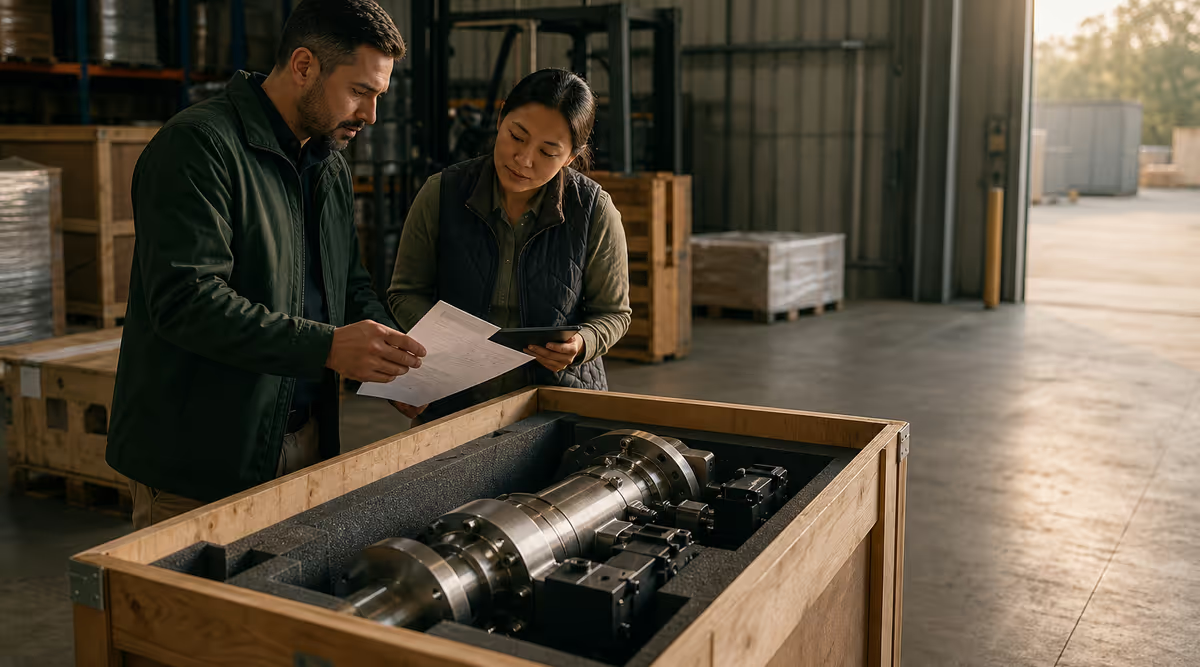
Buying technology from another country does not end when you choose a supplier. For the equipment to arrive and work inside your operation, the technical need, purchase, documentation, logistics, and plant integration must be connected.
This guide brings together the points worth structuring before requesting a quote or moving forward with an import.
Define what you need to solve
The first step is not searching a catalog. It is describing the operational problem you want to solve and the outcome that should change. This definition helps you compare alternatives that may look similar but have different scopes and installation requirements.
Document:
- the task, capacity, or constraint behind the purchase;
- the function the equipment must perform;
- the volume, precision, speed, or availability you need;
- the systems, machines, or people it must interact with;
- a reasonable commissioning date and set of conditions.
Once the need is clear, it is easier to separate essential requirements from preferences and avoid buying a specification that does not fit the plant.
Assess suppliers and alternatives
An international search should not be based on price alone. It also matters whether the supplier can demonstrate experience, provide technical documentation, supply spare parts, and respond when an issue appears.
Before comparing offers, review:
- references, experience, and manufacturing capacity;
- available technical sheets, drawings, manuals, and certifications;
- warranty, spare-parts, and support conditions;
- compatibility with destination standards or requirements;
- Incoterm, payment terms, manufacturing time, and delivery time.
The comparison should consider the cost and risk of the complete project, not only the FOB value or published price.
Close the technical and commercial scope
A useful quote makes its inclusions clear. The equipment may require accessories, software, consumables, fixtures, training, or adaptations that do not appear in the first conversation.
Ask the proposal to detail:
- exact configuration and included components;
- documentation to be delivered;
- packaging, insurance, and transport conditions;
- installation and commissioning responsibilities;
- acceptance tests and criteria for validating the result;
- post-delivery support, spare parts, and response times.
This level of detail prevents a difference in interpretation from becoming a cost or delay once the shipment is already in transit.
Prepare documentation and logistics
An import involves commercial documents, transport, customs, and coordination between parties that need the same information. An incorrect detail in the invoice, packing list, or classification can create delays and additional costs.
Confirm:
- the goods description and classification;
- weight, dimensions, and packaging type;
- origin, destination, and logistics route;
- permits, certifications, or special requirements;
- who coordinates the freight forwarder, customs broker, and insurance.
Logistics planning should start before the supplier finishes manufacturing, because the equipment’s arrival affects space, unloading, installation, and the availability of the local team.
Plan for arrival and integration
An import is successful when the equipment can become part of the operation, not only when it crosses the border. Before shipment, review the installation site, required utilities, interfaces, and training needs.
Useful questions include:
- Is there enough space and suitable unloading equipment?
- Does the plant have the required power, air, network, or other utilities?
- Who will install, configure, and test the equipment?
- Which data or signals must it exchange with other systems?
- What procedure will the team follow if a fault occurs?
If these answers are not defined, the risk appears after the purchase, when correcting it is usually slower and more expensive.
What an import management proposal should include
An end-to-end service should identify the project stages, owners, and assumptions. At a minimum, it should cover:
- Assessment of the need and requirements.
- Supplier search and evaluation.
- Technical and commercial comparison of alternatives.
- Review of documents and purchasing conditions.
- Coordination of transport, customs, and delivery.
- Installation, commissioning, and integration when required.
The scope may vary according to the equipment and country of origin, but it should be written down before the operation is confirmed.
How we help
At Gist Point we coordinate the complete journey through our technology import management service, from defining the need to the equipment’s arrival and integration.
If you have not selected a technology yet, we can also help compare alternatives and structure the information before requesting a quote. Tell us what you need to import and we will review the next step.