
Industrial Automation: trends transforming production in 2026
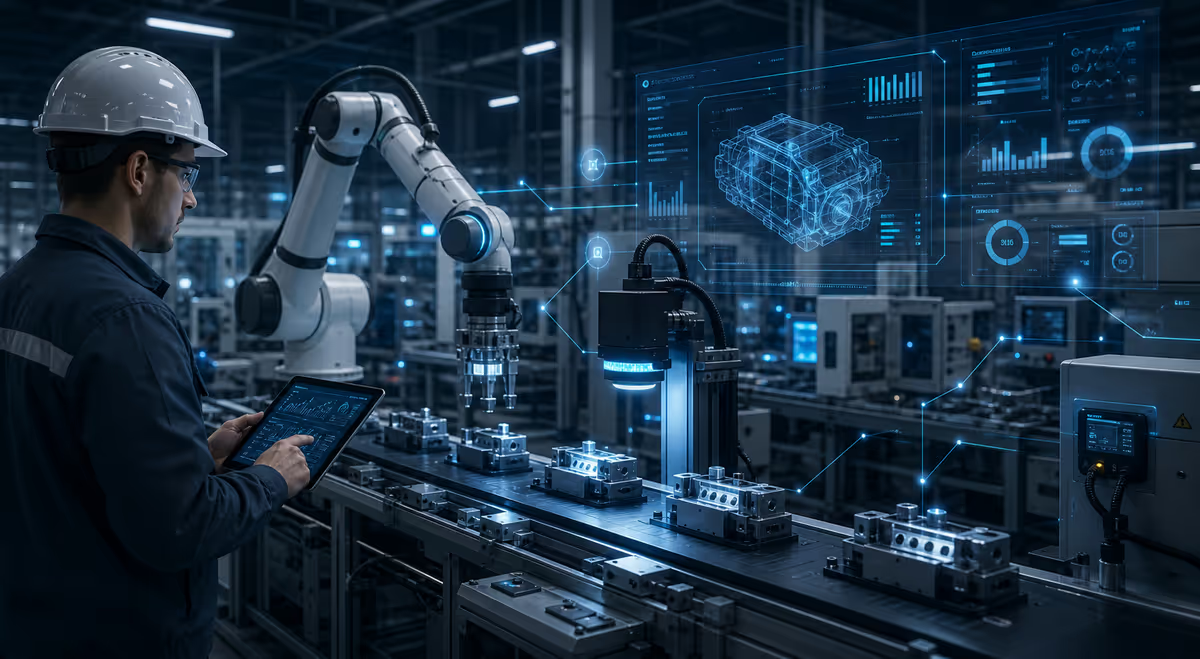
The convergence of advanced robotics, artificial intelligence, and connectivity is marking a turning point in the manufacturing industry. Companies that adopt these technologies today are not just improving efficiency — they are redefining their competitive standards.
The trends leading the change
Collaborative robots (cobots)
Cobots work alongside human operators without the need for safety cages. They can be programmed in hours, not weeks, and adapt to different tasks on the same production line. Their adoption grew 40% year-over-year in the manufacturing sector.
Machine vision and automated inspection
Industrial vision systems detect defects with precision that surpasses the human eye, at line speeds no inspector could match. This reduces waste, improves traceability, and eliminates human error in quality control.
Digital twins
Simulating complete processes before physically implementing them allows you to anticipate bottlenecks, optimize plant layouts, and reduce commissioning times for new lines.
The impact in numbers
- Cycle time reduction: up to 35% in automated lines
- Waste reduction: 20–25% on average
- Return on investment: 18 to 36 months in well-planned projects
How we assess if your plant is ready
At Gist Point we accompany companies from the initial diagnosis to commissioning. The first step is always a digital maturity analysis: understanding which processes have the greatest automation potential and what the real starting point is.
If you are considering modernizing your operation, contact us for a free initial assessment.